


What is the difference between a western - style gyuto knife and a traditional Japanese gyuto knife?
Dec 05, 2025
Leave a message
In the culinary world, the gyuto knife is a well - known and highly respected tool. It has become a staple in both Western and Japanese kitchens. As a gyuto knife supplier, I often get asked about the differences between Western - style gyuto knives and traditional Japanese gyuto knives. In this blog, I'll delve deep into these differences to help you make an informed choice when purchasing a gyuto knife.

Blade Design
The blade design is one of the most noticeable differences between Western - style and traditional Japanese gyuto knives.
Traditional Japanese Gyuto Knives
Traditional Japanese gyuto knives typically have a thinner and more tapered blade. The thin blade is designed to make precise cuts, especially when slicing raw fish for sushi and sashimi. This thinness also reduces the amount of resistance when cutting through food, allowing for a cleaner and more efficient cut. The blade often has a single - bevel edge, which is sharpened on one side only. This single - bevel edge provides an extremely sharp cutting edge, but it requires more skill to maintain and use.
For example, a traditional Japanese gyuto knife might have a blade thickness of around 1.5 - 2mm at the spine, tapering down to an incredibly thin edge. The single - bevel edge gives it a characteristic asymmetrical look, with one side being flat and the other side having a sharp angle.
Western - Style Gyuto Knives
Western - style gyuto knives, on the other hand, usually have a thicker blade. The increased thickness provides more durability and strength, making them suitable for a wider range of tasks, including chopping through bones and hard vegetables. These knives often have a double - bevel edge, which is sharpened on both sides. The double - bevel edge is more forgiving for novice users and is easier to maintain.
A Western - style gyuto knife may have a blade thickness of around 2.5 - 3mm at the spine. The double - bevel edge gives the knife a more symmetrical appearance and is better suited for general kitchen use where a variety of cutting tasks are required.
Steel and Hardness
The type of steel used and the hardness of the blade are also significant differences between the two types of gyuto knives.
Traditional Japanese Gyuto Knives
Traditional Japanese gyuto knives are often made from high - carbon steel. This type of steel can be hardened to a very high level, typically around 60 - 62 HRC (Rockwell hardness scale). The high hardness allows the blade to hold an extremely sharp edge for a long time. However, high - carbon steel is also more brittle and prone to chipping if used incorrectly.
Japanese blacksmiths have a long - standing tradition of forging and heat - treating steel to achieve the desired hardness and performance. The high - carbon steel used in these knives is often sourced from specific regions in Japan, known for their high - quality iron ore.
Western - Style Gyuto Knives
Western - style gyuto knives are commonly made from stainless steel. Stainless steel is more resistant to corrosion and staining, which is an important factor in a kitchen environment. The hardness of Western - style gyuto knives usually ranges from 55 - 58 HRC. While this is lower than the hardness of traditional Japanese gyuto knives, it still provides a sharp and durable cutting edge.
The use of stainless steel also makes Western - style gyuto knives more suitable for users who don't want to spend a lot of time maintaining their knives. The lower hardness also means that the blades are less likely to chip, making them more forgiving for rough use.
Handle Design
The handle design is another area where Western - style and traditional Japanese gyuto knives differ.
Traditional Japanese Gyuto Knives
Traditional Japanese gyuto knives often have a wooden handle, typically made from materials like ho wood or ebony. The handle is usually octagonal in shape, which provides a comfortable and secure grip. The Japanese handle design is often more ergonomic for a traditional Japanese grip, which involves holding the knife with the thumb and index finger on the blade near the handle.
The wooden handle is also often finished with a natural oil or lacquer, which not only enhances the appearance but also protects the wood from moisture and wear.
Western - Style Gyuto Knives
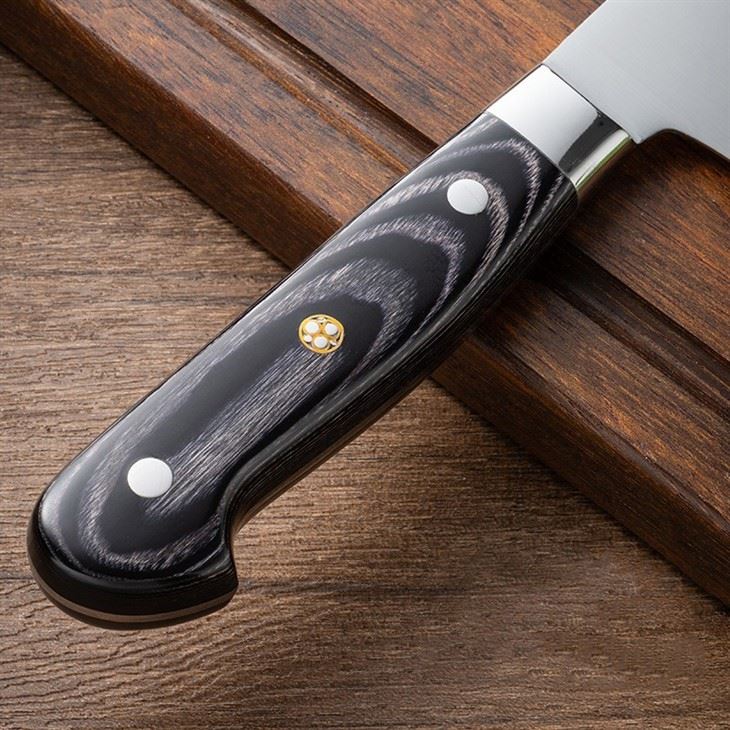
Western - style gyuto knives usually have a handle made from materials like plastic, rubber, or composite materials. The handle design is often more in line with Western ergonomics, with a shape that is comfortable for a Western grip, where the hand wraps around the handle more fully.
Some Western - style gyuto knives also have a bolster, which is a thickened area between the blade and the handle. The bolster provides additional balance and protection for the hand, but it can also add weight to the knife.
Usage and Application
The differences in design and construction of Western - style and traditional Japanese gyuto knives also lead to differences in their usage and application.
Traditional Japanese Gyuto Knives
Traditional Japanese gyuto knives are ideal for tasks that require precision and a very sharp edge. They are commonly used in Japanese cuisine for slicing raw fish, vegetables, and meats. The thin blade and single - bevel edge make them perfect for creating thin, uniform slices.
For example, when preparing sushi, a traditional Japanese gyuto knife can make clean cuts through the fish, ensuring that the texture and flavor of the fish are preserved.
Western - Style Gyuto Knives
Western - style gyuto knives are more versatile and can be used for a wider range of tasks. They are suitable for chopping, slicing, and dicing a variety of ingredients, including hard vegetables, meats, and even bones. The thicker blade and double - bevel edge make them more suitable for heavy - duty tasks in a Western kitchen.
In a Western kitchen, a Western - style gyuto knife can be used to chop through a whole chicken, slice a large tomato, or dice onions with ease.
Price and Availability
Price and availability are also factors to consider when comparing Western - style and traditional Japanese gyuto knives.
Traditional Japanese Gyuto Knives
Traditional Japanese gyuto knives are often more expensive. The high - quality materials, traditional forging techniques, and skilled craftsmanship all contribute to the higher price. These knives are also less widely available, especially outside of Japan. You may need to purchase them from specialty knife stores or online retailers that specialize in Japanese kitchenware.
However, the investment in a traditional Japanese gyuto knife can be worth it for professional chefs or serious home cooks who appreciate the quality and performance of these knives.
Western - Style Gyuto Knives
Western - style gyuto knives are generally more affordable and widely available. They can be found in most kitchenware stores, department stores, and online retailers. The lower price point makes them a popular choice for novice cooks or those on a budget.
Our Product Range
As a gyuto knife supplier, we offer a wide range of both Western - style and traditional Japanese gyuto knives. Our 8 - inch Forged Gyuto Knife is a great example of a high - quality Western - style gyuto knife. It features a durable stainless steel blade and a comfortable handle, making it suitable for a variety of kitchen tasks.
If you're looking for a more traditional option, our 8 - Inch Forged Glossy Beef Knife is made from high - carbon steel and has a sharp, single - bevel edge. It's perfect for slicing raw beef and other meats with precision.
For those on a budget, our 8 - Inch 40Cr13 Stainless Steel Beef Knife offers a great balance of quality and affordability. It's made from stainless steel and is suitable for general kitchen use.
Conclusion
In conclusion, the differences between Western - style and traditional Japanese gyuto knives are significant. Each type of knife has its own unique features and advantages, depending on your cooking style, skill level, and budget. Whether you're a professional chef or a home cook, choosing the right gyuto knife can make a big difference in your cooking experience.
If you're interested in purchasing a gyuto knife or have any questions about our products, please feel free to contact us for a purchase negotiation. We're here to help you find the perfect knife for your needs.
References
- "The Art of Japanese Knifemaking" by John J. Boos & Co.
- "Kitchen Knives: A Comprehensive Guide" by The International Association of Culinary Professionals.
- "Knife Skills for the Home Cook" by America's Test Kitchen.
Send Inquiry