


What is the best way to grip a bone boning knife for precise cuts?
Jan 16, 2026
Leave a message
Hey there, fellow kitchen enthusiasts and meat lovers! As a bone boning knife supplier, I've seen firsthand how a proper grip can make all the difference when it comes to precise cuts. In this blog post, I'm gonna share with you the best way to grip a bone boning knife for those clean, accurate slices.
First things first, let's talk about why the right grip matters. A good grip gives you control over the knife, reduces the risk of accidents, and allows you to make the most of the knife's sharpness. Whether you're a professional chef or a home cook, getting the grip right is essential for efficient and safe boning.
There are a few different grips you can use with a bone boning knife, but one of the most effective is the pinch grip. To use the pinch grip, hold the blade of the knife between your thumb and index finger, right where the blade meets the handle. This gives you direct control over the tip of the knife, which is crucial for making delicate cuts around bones and joints.
Next, wrap your remaining fingers around the handle of the knife. Make sure your grip is firm but not too tight. You want to be able to move the knife smoothly and easily without losing control. The pinch grip allows you to apply just the right amount of pressure to the blade, making it easier to cut through meat and cartilage without damaging the knife or the meat.
Another important aspect of the pinch grip is the angle of the knife. You want to hold the knife at a slight angle, usually around 15 to 20 degrees. This angle allows the blade to slide smoothly through the meat, making clean cuts with minimal resistance. If the angle is too steep, the blade may get stuck or cause the meat to tear. If the angle is too shallow, the blade may not cut through the meat effectively.
Now, let's talk about the type of bone boning knife you're using. Different knives have different shapes and sizes, which can affect the way you grip them. For example, a Forged Hammered High Carbon Boning Knife is typically heavier and more durable than a Stainless Steel Boning Knife. This means you may need to adjust your grip slightly to accommodate the weight and balance of the knife.

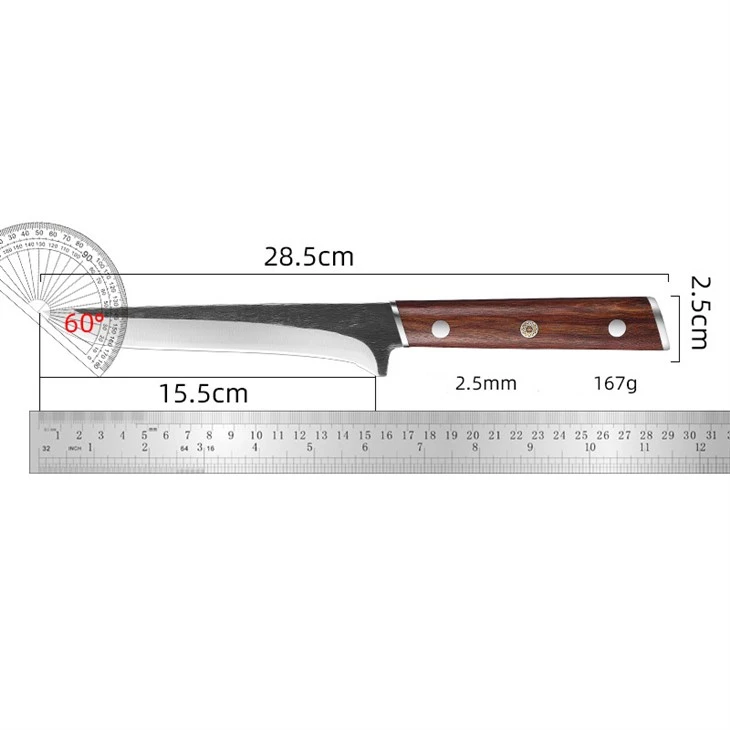
A Forged High Carbon Boning Knife is also known for its sharpness and ability to hold an edge. This makes it ideal for making precise cuts, but it also means you need to be careful when using it. A sharp knife can be dangerous if not handled properly, so make sure you're using the right grip and taking the necessary safety precautions.
In addition to the pinch grip, there are a few other grips you can try depending on the task at hand. The fist grip is another common grip that's often used for more heavy-duty boning. To use the fist grip, hold the knife like you're holding a hammer, with your fingers wrapped around the handle and your thumb on the side. This grip gives you more leverage and power, making it easier to cut through tough joints and bones.
The palm grip is a more relaxed grip that's often used for slicing and trimming. To use the palm grip, hold the knife in the palm of your hand, with your fingers wrapped around the handle and your thumb on the back of the blade. This grip gives you a more natural and comfortable hold, allowing you to make smooth, even cuts.
No matter which grip you choose, it's important to practice and get comfortable with it. The more you use the knife, the better you'll become at using the right grip for the job. You may also want to try different grips with different knives to see which ones work best for you.
In conclusion, the best way to grip a bone boning knife for precise cuts is to use the pinch grip. This grip gives you direct control over the tip of the knife, allowing you to make clean, accurate cuts around bones and joints. Make sure you're holding the knife at the right angle and using the right amount of pressure. And don't forget to practice and get comfortable with the grip.
If you're in the market for a high-quality bone boning knife, we've got you covered. We offer a wide range of bone boning knives, including Forged Hammered High Carbon Boning Knife, Stainless Steel Boning Knife, and Forged High Carbon Boning Knife. Our knives are made from the finest materials and are designed to provide you with years of reliable use.
If you're interested in learning more about our bone boning knives or have any questions about our products, please don't hesitate to contact us. We'd love to hear from you and help you find the perfect knife for your needs.
Let's work together to make your kitchen a more efficient and enjoyable place to be!
References:
- Professional Cooking Techniques by John Mitzewich
- The Complete Guide to Knifemaking by Jim Hrisoulas
Send Inquiry