


How to choose a knife sharpener?
Jan 02, 2026
Leave a message
Picking the right knife sharpener can be a bit of a head - scratcher, especially with so many options out there. As a knife sharpener supplier, I've seen it all, and I'm here to share some tips to help you make the best choice.
First Things First: Know Your Knives
Before you even start looking at knife sharpeners, you need to understand the types of knives you have. Different knives have different blade characteristics, and these will determine the kind of sharpener you need.
For example, if you've got a set of Japanese chef's knives, they usually have a very thin and hard blade. These blades require a more precise sharpening method. On the other hand, Western - style knives often have a thicker blade and can tolerate a broader range of sharpening techniques.
If you're not sure about your knives, just take a close look at the blade. A thinner blade might need a finer - grit sharpener, while a thicker one can handle a coarser grit to start with.

Types of Knife Sharpeners
There are several types of knife sharpeners available in the market, and each has its own pros and cons.
Manual Sharpeners
Manual sharpeners are the old - school way of getting your knives sharp. They're often more affordable and give you more control over the sharpening process.
One popular type is the sharpening stone. You can check out our Knife Sharpener Stone Set. These stones come in different grits. A coarse - grit stone is great for fixing a really dull or damaged blade. You use it to remove a lot of metal quickly and reshape the edge. Then, you can move on to a finer - grit stone to polish the edge and make it super sharp.
Another manual option is the pull - through sharpener. These are usually small and portable. They have slots with different grits of abrasive material. You just pull the knife through the slots a few times, and it gets sharp. The advantage of pull - through sharpeners is that they're easy to use, even if you're a beginner. But they might not be as precise as sharpening stones.
Electric Sharpeners
Electric sharpeners are a bit more high - tech. They use motors to spin abrasive wheels or belts to sharpen the knife. They're generally faster than manual sharpeners and can be a great option if you have a lot of knives to sharpen or if you're not very good at manual sharpening.
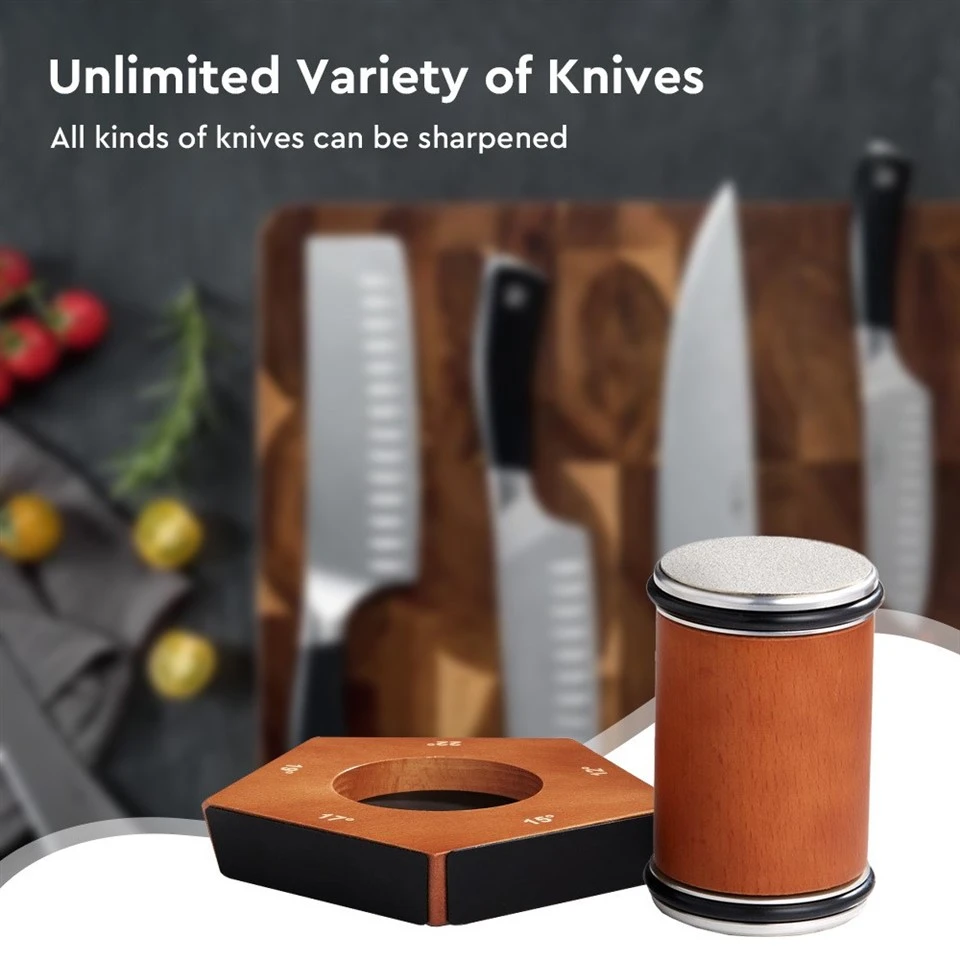
One of our cool products is the DS - 9971B Rolling Knife Sharpener 5 Angles (12, 15, 17, 19, 22°) - 5 Sided Rolling Knife Sharpener Kit F, Black Box Knife Sharpener Or Knives. This sharpener allows you to choose different angles for sharpening, which is really useful because different knives need different angles. For example, a fillet knife might need a smaller angle for a very sharp, delicate edge, while a bread knife can handle a larger angle.
Specialty Sharpeners
There are also specialty sharpeners for specific types of knives. For instance, if you have a serrated knife, you can't use a regular sharpener. You need a serrated knife sharpener, which is designed to fit the shape of the serrations and sharpen them properly.
Factors to Consider When Choosing
Now that you know the types of sharpeners, here are some other factors to keep in mind when making your choice.
Ease of Use
If you're not very handy or don't have a lot of time, you'll want a sharpener that's easy to use. Electric sharpeners are usually a good choice in this case because they do most of the work for you. Manual sharpeners can be a bit more complicated, especially if you're new to sharpening. But once you get the hang of it, they can be really rewarding.
Cost
Cost is always a factor. Manual sharpeners are generally cheaper, especially the basic pull - through ones. Electric sharpeners and high - end sharpening stone sets can be more expensive. But remember, a good sharpener is an investment. It'll keep your knives in good condition for a long time, so it's worth spending a bit more if you can.
Durability
You want a sharpener that's going to last. Look for ones made from high - quality materials. For example, a sharpening stone made from natural or high - grade synthetic materials will last longer and give better results than a cheap, low - quality one. Electric sharpeners should have a sturdy motor and well - made components.
Portability
If you're someone who likes to take your knives on the go, like a chef who works at different locations or an outdoors person, you'll need a portable sharpener. Pull - through sharpeners are great for this because they're small and lightweight. Some electric sharpeners are also portable, but they might require a power source.
Our Black Knife Sharpener
We also have a Black Knife Sharpener that's a real all - rounder. It's easy to use, looks great in your kitchen, and can handle a variety of knives. Whether you've got a kitchen full of different types of knives or just a couple of everyday ones, this sharpener can do the job.
Conclusion
Choosing the right knife sharpener doesn't have to be a nightmare. By understanding your knives, the different types of sharpeners, and the factors to consider, you can make an informed decision.
If you're in the market for a knife sharpener, or if you're a business looking to stock up on quality sharpeners, we're here to help. We've got a wide range of products to suit every need and budget. Don't hesitate to reach out to us for more information or to discuss your specific requirements. We're always happy to assist with your knife - sharpening needs and help you find the perfect product.
References
- "The Complete Guide to Knife Sharpening" by Knife Enthusiast Magazine
- "Knife Sharpening Basics" from a well - known cooking blog
Send Inquiry