


How long does a chef knife last?
Dec 17, 2025
Leave a message
How long does a chef knife last? This is a question that many professional chefs, home cooks, and kitchen enthusiasts often ponder. As a chef knife supplier, I've had the privilege of working closely with a wide range of customers and products, and I'm excited to share my insights on this topic.
Factors Affecting the Lifespan of a Chef Knife
The lifespan of a chef knife can vary significantly based on several key factors. Let's take a closer look at each of these elements.
Quality of Materials
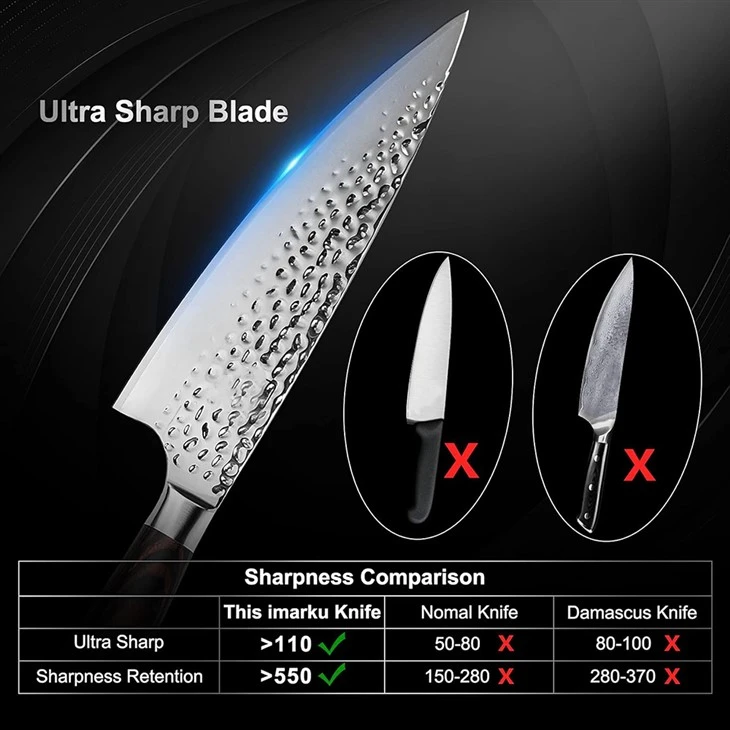
The materials used in the construction of a chef knife play a crucial role in determining its longevity. High - quality steels, such as VG10, are known for their excellent edge retention, corrosion resistance, and durability. For example, our 8 Inch VG10 Steel Forged Chef Knife is crafted from premium VG10 steel. This steel has a high carbon content, which allows it to hold a sharp edge for an extended period. In contrast, lower - quality steels may dull quickly, rust easily, and require more frequent sharpening.
Forging Process
The forging process is another important factor. Forged chef knives are generally more durable than stamped ones. In the forging process, a single piece of steel is heated and shaped under high pressure. This results in a more homogeneous structure and better overall strength. Our 8 - Inch Forged Hammer Chef Knife is forged using a traditional method that enhances its toughness and resilience. The forging process aligns the steel grains, making the knife less prone to chipping and breaking.
Usage Frequency and Type
How often a chef knife is used and the types of tasks it is used for also impact its lifespan. A professional chef who uses a knife for several hours a day in a busy kitchen will naturally wear out the knife faster than a home cook who only uses it occasionally. Cutting through hard materials like bones or frozen foods can also cause more damage to the blade compared to slicing soft vegetables. If a knife is used to perform heavy - duty tasks on a regular basis, it may need to be replaced more frequently.
Maintenance and Care
Proper maintenance and care are essential for extending the lifespan of a chef knife. Regular sharpening is crucial to keep the blade sharp. Using a high - quality sharpening stone or a professional sharpener can help maintain the edge of the knife. Additionally, cleaning and drying the knife immediately after use can prevent rust and corrosion. Storing the knife in a knife block or a sheath can protect it from damage.
Average Lifespan of Chef Knives
Based on my experience as a supplier, a well - made and well - maintained chef knife can last anywhere from 5 to 20 years. For a home cook who uses the knife moderately and takes good care of it, a high - quality chef knife can last 10 to 20 years. These knives are typically used for basic food preparation tasks, such as chopping, slicing, and dicing vegetables, fruits, and meats.
On the other hand, a professional chef who uses the knife intensively may need to replace the knife every 5 to 10 years. The constant use in a commercial kitchen environment, with a high volume of cutting and a variety of food items, puts more stress on the blade.
Signs That a Chef Knife Needs to be Replaced
It's important to recognize when a chef knife has reached the end of its useful life. Here are some signs that indicate it's time to replace a knife:
Dullness
If the knife can no longer hold a sharp edge, even after frequent sharpening, it may be time for a replacement. A dull knife is not only less efficient but also more dangerous, as it requires more force to cut, increasing the risk of accidents.
Chipping or Breaking
Visible chips or breaks in the blade are clear signs that the knife is damaged beyond repair. Chipping can occur when the knife hits a hard surface or is used to cut through tough materials. Once a blade has a significant chip, it may not be safe to use and should be replaced.
Rust and Corrosion
Severe rust and corrosion can weaken the blade and make it unsafe. If a knife has extensive rust that cannot be removed, it's a good indication that it's time to get a new one.
Tips for Extending the Lifespan of a Chef Knife
To get the most out of your chef knife, here are some tips for extending its lifespan:
Use the Right Cutting Surface
Always use a cutting board made of wood or plastic. Avoid cutting on hard surfaces like glass or granite, as this can damage the blade.
Sharpen Regularly
Invest in a good sharpening tool and learn how to sharpen your knife properly. Regular sharpening will keep the blade in good condition and prevent it from becoming too dull.
Clean and Dry Immediately
After each use, wash the knife with mild soap and warm water, then dry it thoroughly. This will prevent rust and corrosion.
Store Properly
Store the knife in a knife block, a sheath, or a magnetic strip. This will protect the blade from damage and keep it safe.
Our Product Line and Why Choose Us
As a chef knife supplier, we offer a wide range of high - quality chef knives, including the DS - 2658A 8 Inch Forged Chef Knfie. Our knives are crafted with precision and care, using the finest materials and the latest manufacturing techniques. We are committed to providing our customers with knives that offer excellent performance, durability, and value for money.
Whether you are a professional chef, a home cook, or a kitchenware retailer, we have the right chef knife for you. Our products are backed by our expertise and a dedication to customer satisfaction.
Contact Us for Procurement
If you are interested in purchasing our chef knives or have any questions about our products, we encourage you to reach out to us. We are always ready to assist you with your procurement needs. Our team of experts can provide you with detailed information about our products, pricing, and shipping options.

References
- "The Science of Knife Sharpening" by Harold McGee
- "Professional Kitchen Knives: A Guide to Selection and Use" by James Peterson
Send Inquiry