


What is the weight of a typical santoku knife?
Nov 19, 2025
Leave a message
Hey there, kitchen enthusiasts! As a long - time santoku knife supplier, I've gotten tons of questions from customers over the years. One question that pops up more often than you'd think is, "What is the weight of a typical santoku knife?" Well, let's dig into this topic and find out!
First off, for those who might not know, a santoku knife is a versatile blade that originated in Japan. It's great for slicing, dicing, and mincing all kinds of ingredients, from veggies to meats. Its popularity has spread far and wide across the globe, and that's why so many people are interested in its details, including its weight.
The weight of a santoku knife can vary quite a bit, and there's no one - size - fits - all answer. A lot of factors come into play when it comes to determining how heavy a santoku knife will be.
Factors Affecting the Weight
Blade Material
The material used for the blade is a major factor. For instance, knives made from high - carbon stainless steel are often on the heavier side. This type of steel is known for its durability and sharpness, but it also adds some heft. On the other hand, knives made from titanium or some lightweight alloys can be significantly lighter. Titanium is strong and corrosion - resistant, and it allows for a more agile knife that's easier to handle for long periods.
Blade Size
Size matters, and in the case of santoku knives, the length of the blade has a direct impact on its weight. Generally, longer blades mean more weight. A 5 - inch santoku knife will be lighter than a 7 - inch one. The extra length adds more metal, which naturally increases the overall mass of the knife.
Handle Design and Material
The handle is another crucial element. Handles can be made from a variety of materials such as wood, plastic, or composite materials. Wooden handles, especially those made from dense hardwoods like oak or walnut, can add some weight to the knife. Plastic handles, on the other hand, are usually lighter. The design of the handle also plays a role. Some handles are thicker and bulkier, which will make the knife heavier compared to a more streamlined, minimalist handle design.
Typical Weight Ranges
Now, let's talk about what you can expect in terms of weight for a typical santoku knife.
For a smaller 5 - inch santoku knife, you're looking at a weight range of around 4 to 6 ounces. These knives are great for those who prefer a lighter touch or for tasks that require more precision, like mincing herbs or slicing small fruits.
A 6 - inch santoku knife usually weighs between 6 to 8 ounces. It's a bit more substantial than the 5 - inch version but still relatively easy to handle. This size is a good middle - ground for most home cooks, offering a bit more cutting power without being too heavy.
When it comes to the popular 7 - inch santoku knife, the weight can range from 8 to 10 ounces. This is a workhorse of a knife, suitable for a wide range of kitchen tasks. Whether you're chopping up a whole chicken or dicing a large batch of vegetables, a 7 - inch santoku knife can handle it.
If you're interested in our 7 - inch santoku knives, we have some great options. Check out our 7 - Inch Forged Glossy Santoku Knife, 7 - Inch Hand - Forged Hammered Santoku Knife, and 7 - inch Germany Steel Satntoku Knife. Each of these knives has its own unique features and weight characteristics, so you can choose the one that suits your needs best.
Why Does Weight Matter?
You might be wondering why the weight of a santoku knife is such a big deal. Well, it has a lot to do with how comfortable and efficient you are in the kitchen.
A lighter knife is easier to maneuver. It's great for tasks that require quick, precise movements. You can slice through ingredients with less effort, and it's less tiring to hold for extended periods. This is especially important if you're doing a lot of chopping and dicing, like when you're prepping for a big dinner party.
On the other hand, a heavier knife can provide more cutting power. When you're dealing with tougher ingredients, like thick - skinned vegetables or large cuts of meat, a heavier blade can make the job easier. The extra weight helps to push through the material more effectively, reducing the amount of force you need to apply.
Finding the Right Weight for You
So, how do you decide which weight is right for you? It really comes down to your personal preferences and the types of tasks you'll be doing in the kitchen.
If you're a beginner cook or someone who doesn't spend a lot of time in the kitchen, a lighter knife might be a better choice. It's more forgiving and easier to control, which can help you build confidence as you learn different cutting techniques.
For experienced chefs or those who do a lot of heavy - duty cooking, a heavier knife could be the way to go. You'll appreciate the added cutting power and the stability it provides.
It's also a good idea to try out different weights in person if you can. Visit a kitchenware store and hold a few different santoku knives to see how they feel in your hand. Pay attention to how balanced the knife is and how comfortable it is to grip.
Conclusion
In conclusion, the weight of a typical santoku knife can vary depending on factors like blade material, size, and handle design. Smaller knives are generally lighter, while larger ones tend to be heavier. The right weight for you depends on your cooking style and personal preferences.
Whether you're a home cook looking to upgrade your kitchen tools or a professional chef in need of a reliable santoku knife, we've got you covered. We offer a wide range of santoku knives with different weights and features to meet your needs.

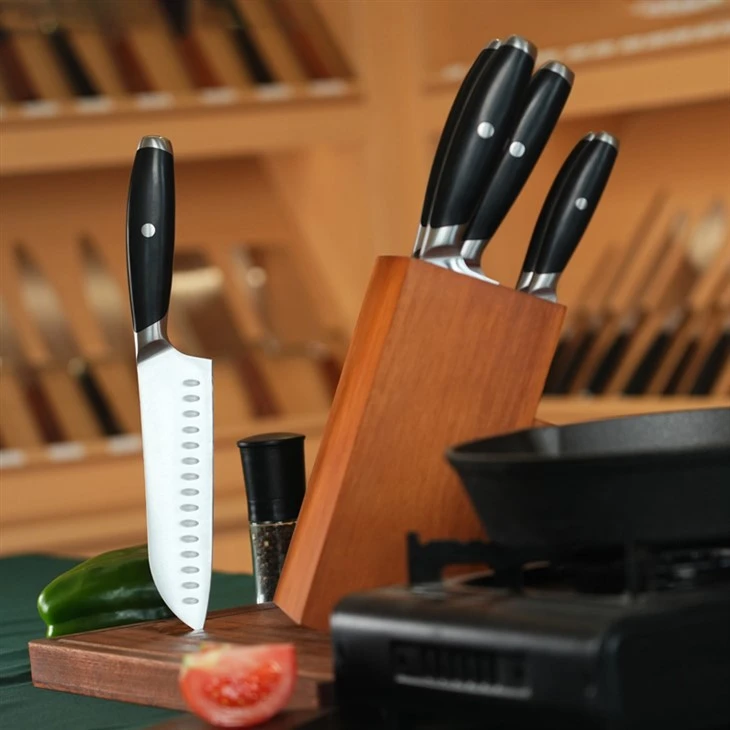
If you're interested in purchasing our santoku knives or have any questions about their weight or other specifications, don't hesitate to reach out. We're here to help you find the perfect knife for your kitchen. Start a conversation with us to discuss your requirements and explore the best options for you.
References
- "The Art of Japanese Knifemaking" by Hiroshi Tanaka
- "Kitchen Knives: A Comprehensive Guide" by Sarah Thompson
Send Inquiry