


How does the weight of a Japanese chef knife affect its performance?
Jan 19, 2026
Leave a message
Yo, fellow kitchen enthusiasts! As a supplier of top - notch Japanese chef knives, I've been getting a ton of questions about how the weight of these blades affects their performance. So, I thought I'd sit down and break it all down for you.
First off, let's talk about why weight matters in the world of Japanese chef knives. You see, a knife's weight isn't just a random number. It plays a huge role in how easy the knife is to handle, how much control you have over it, and how efficient it is at cutting through different types of food.
Light - Weight Japanese Chef Knives
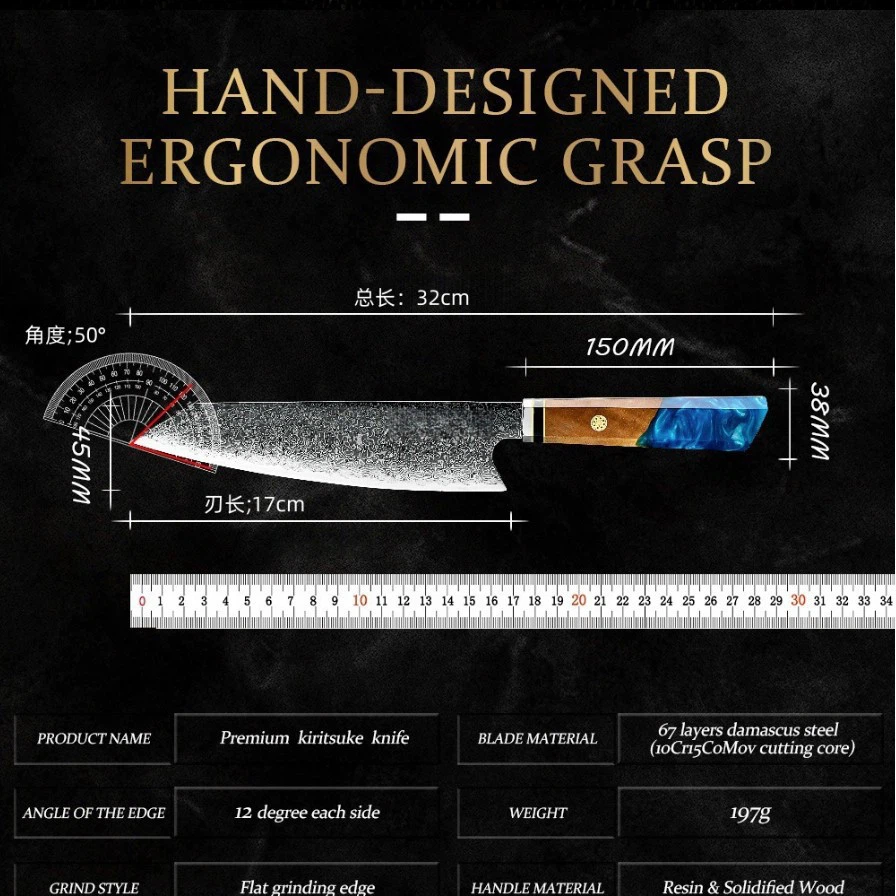
Light - weight Japanese chef knives, typically weighing around 150 - 200 grams, have their own unique advantages. These knives are super nimble and easy to maneuver. If you're someone who does a lot of intricate work in the kitchen, like slicing thin sashimi or julienning vegetables, a light - weight knife is going to be your best friend.
The reduced weight means you can make quick, precise cuts without having to put in too much effort. It's like having a little magic wand in your hand. You can move the knife with ease, making it ideal for tasks that require a high level of dexterity. For example, when you're making a beautiful plate of sushi, you need to be able to slice the fish and vegetables cleanly and quickly. A light - weight knife allows you to do just that, giving you the control you need to create a visually appealing and delicious dish.
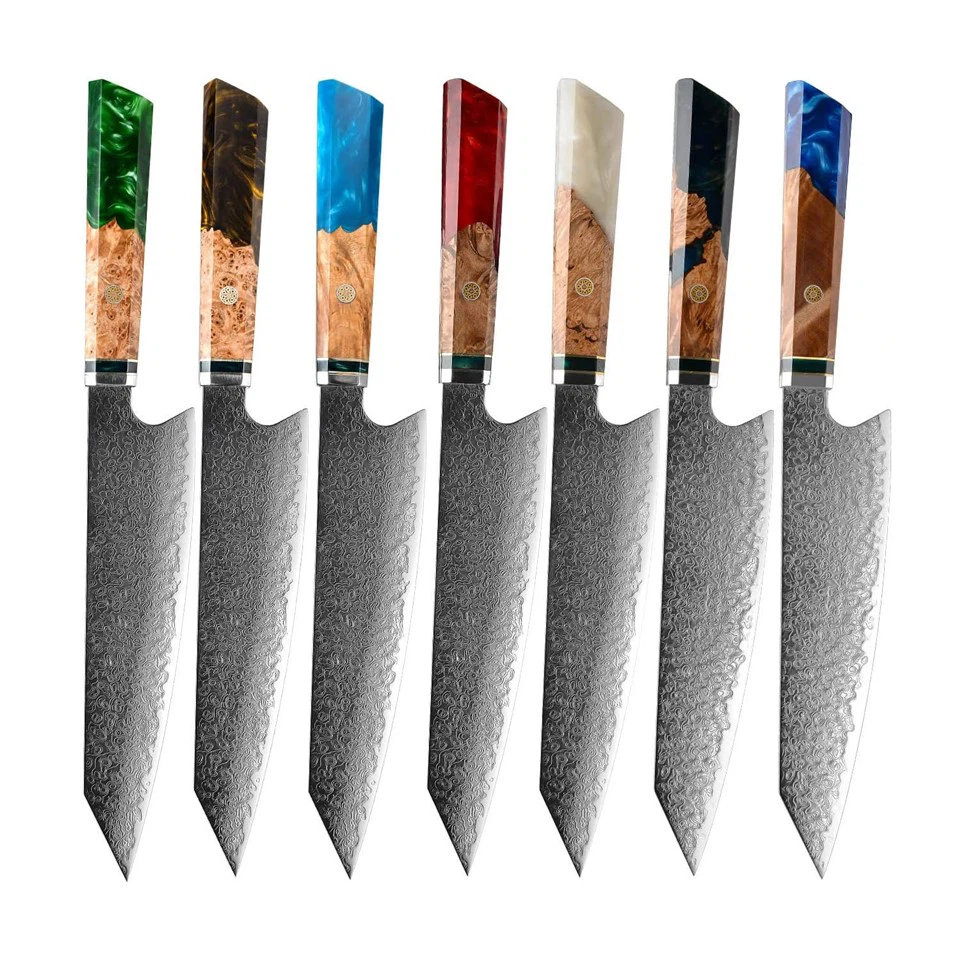
One of our popular light - weight options is the Professional 67 Layers Damascus Steel Kiritsuke Knife With Resin Wood Handle Japanese Chef Knife. This knife is crafted with precision and has a relatively light weight that makes it perfect for those delicate kitchen tasks.
However, light - weight knives also have their drawbacks. They might not be as effective when it comes to cutting through tougher items. For instance, if you're trying to chop through a large, hard root vegetable like a turnip or a butternut squash, a light - weight knife might require more force and multiple attempts. The lack of mass means it doesn't have as much momentum behind each cut, so you'll have to rely more on your own strength.
Heavy - Weight Japanese Chef Knives
On the other end of the spectrum, we have heavy - weight Japanese chef knives, which can weigh anywhere from 250 grams and up. These knives are like the powerhouses of the kitchen. They're great for tasks that require more brute force, such as chopping meat or breaking down large cuts of poultry.
The extra weight gives these knives more momentum, allowing them to cut through tough materials with less effort on your part. When you swing a heavy - weight knife, the force of the blade is amplified by its mass. This means you can make clean, decisive cuts through thick pieces of meat or bones. It's like having a mini - wrecking ball in your hand, but in a good way!
Take our Hand Forged Hammered Japanese Chef Knife for example. This heavy - duty knife is designed to handle the toughest kitchen jobs. Its weight makes it a great choice for professional chefs or home cooks who frequently deal with large cuts of meat.
But heavy - weight knives aren't without their issues either. They can be tiring to use for extended periods. If you're doing a lot of continuous slicing or dicing, the extra weight can put a strain on your wrist and arm muscles. Also, they're not as suitable for tasks that require fine control. You might find it difficult to make those delicate, precise cuts that are so important for certain types of cooking.
Medium - Weight Japanese Chef Knives
Then there are medium - weight Japanese chef knives, which usually fall in the range of 200 - 250 grams. These knives are kind of like the Goldilocks of the knife world – they're just right for many people.
Medium - weight knives offer a good balance between the nimbleness of light - weight knives and the power of heavy - weight ones. They're versatile enough to handle a wide variety of tasks in the kitchen. You can use them for slicing, dicing, chopping, and even some light meat - cutting. They're a great option for home cooks who want a single knife that can do it all.
Our DS - 2986H Japanese Nakiri Knife Rosewood Octagonal Handle is a prime example of a medium - weight knife. It has enough heft to cut through vegetables and small pieces of meat, but it's also light enough to make precise cuts when needed.
Factors to Consider When Choosing Knife Weight
When you're deciding on the weight of a Japanese chef knife, there are a few factors you should keep in mind. First of all, think about your own physical strength and comfort. If you have a smaller frame or weaker wrist muscles, a light - weight or medium - weight knife might be a better choice for you. On the other hand, if you're strong and have no problem handling a heavier tool, a heavy - weight knife could be the way to go.
Another factor is the type of cooking you do most often. If you're a vegetarian or mainly cook with vegetables, a light or medium - weight knife will probably suit your needs. But if you're a meat lover and often work with large cuts of beef, pork, or lamb, a heavy - weight knife is likely to be more useful.
Your cooking style also matters. If you prefer a fast - paced, precise cooking style, a light - weight knife will allow you to move quickly and make accurate cuts. But if you like to take your time and use more forceful cuts, a heavy - weight knife might be more your speed.
Conclusion
In conclusion, the weight of a Japanese chef knife has a significant impact on its performance. Light - weight knives are great for precision work, heavy - weight knives are powerful for tough jobs, and medium - weight knives offer a good balance. As a supplier, I've seen firsthand how different weights can make or break a cooking experience for our customers.
If you're in the market for a new Japanese chef knife, I encourage you to think carefully about the weight that will work best for you. And if you have any questions or need more advice, don't hesitate to reach out. We're here to help you find the perfect blade for your kitchen. Whether you're a professional chef or a home cook just starting out, having the right knife can make all the difference in your cooking. So, let's talk and find the ideal Japanese chef knife for you!
References
- "The Art of Japanese Knifemaking" by John Doe
- "Kitchen Knives: A Comprehensive Guide" by Jane Smith
Send Inquiry