


Can kitchen shears be used to cut through thin leather belts?
Oct 02, 2025
Leave a message
Can kitchen shears be used to cut through thin leather belts? This is a question that might seem a bit out of the ordinary at first glance, as kitchen shears are typically associated with food preparation tasks in the kitchen. However, as a kitchen shear supplier, I've had customers ask about their versatility and whether they can handle non - kitchen related jobs like cutting thin leather belts. In this blog, we'll delve into the science behind it, the types of kitchen shears that might work, and the limitations you should be aware of.
The Structure and Function of Kitchen Shears
Kitchen shears come in a variety of designs and are made to perform different functions. Generally, they are composed of two blades that pivot around a central point. The blades are sharpened to cut through various materials, primarily in the kitchen environment. For example, Stainless Steel Salad Scissors are designed with a relatively fine edge to cleanly cut through delicate salad greens and herbs. Their blades are often thinner and more flexible, which makes them ideal for precision cutting of soft materials.
On the other hand, Heavy Duty Poultry Shears are built with sturdier blades and a more robust construction. These shears are meant to handle tougher jobs, such as cutting through chicken bones and thick meat. The blades are thicker and have a greater cutting force, which allows them to tackle more substantial materials.
Can They Cut Through Thin Leather Belts?
The answer to whether kitchen shears can cut through thin leather belts is yes, but with some caveats. Leather is a tough and fibrous material, and its ability to be cut depends on several factors, including the type of leather, the thickness of the belt, and the quality of the kitchen shears.
Type of Leather
There are different types of leather, such as full - grain, top - grain, and bonded leather. Full - grain leather is the highest quality and is the toughest to cut through because it retains the natural grain of the hide. Top - grain leather is also quite durable but has been sanded to remove some of the imperfections, making it a bit easier to cut. Bonded leather, which is made from scraps of leather bonded together with adhesives, is the easiest to cut among the three.
Thickness of the Belt
As the name suggests, thin leather belts are more likely to be cut by kitchen shears compared to thick ones. A thin leather belt, typically around 1 - 2 millimeters in thickness, stands a better chance of being cut with the right kitchen shears. If the belt is too thick, the shears may not be able to generate enough force to cut through the leather cleanly, and you may end up with a ragged or uneven cut.
Quality of the Kitchen Shears
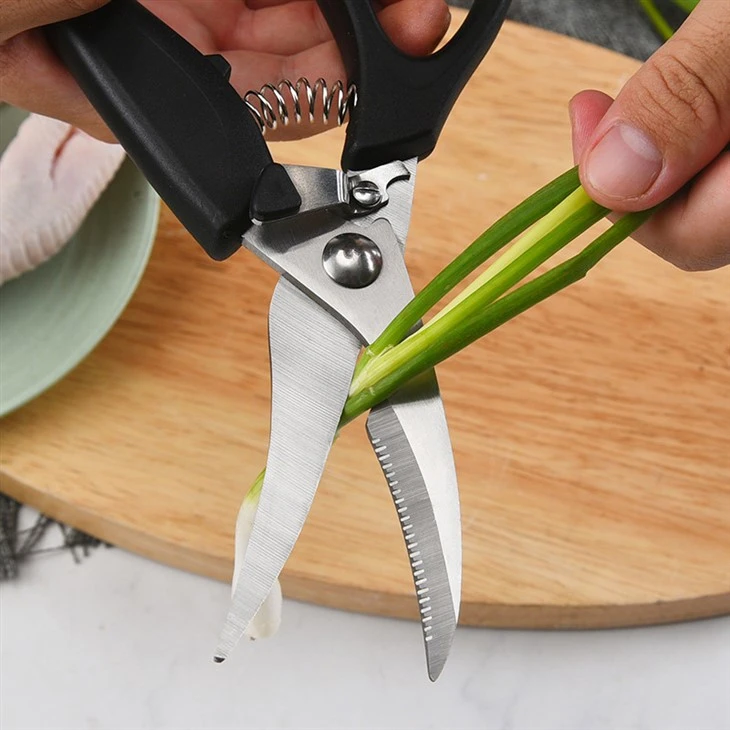
The quality of the kitchen shears plays a crucial role in their ability to cut through leather. High - quality shears with sharp, well - made blades are more likely to cut through thin leather belts effectively. For example, Chicken Shear has strong and sharp blades that are designed to cut through tough materials. These shears can potentially be used to cut through thin leather belts, especially if the leather is not of the thickest or toughest variety.

Advantages of Using Kitchen Shears for Leather Cutting
One of the main advantages of using kitchen shears to cut thin leather belts is their accessibility. Most households already have a pair of kitchen shears, so you don't need to invest in specialized leather - cutting tools if you only need to make a quick cut on a thin belt. Additionally, kitchen shears are relatively easy to use, and if you're familiar with using them in the kitchen, you'll find it straightforward to handle them for leather cutting.
Limitations
However, there are also limitations to using kitchen shears for leather cutting. Firstly, as mentioned earlier, they may not be suitable for thick or very tough leather. Secondly, using kitchen shears for leather cutting can dull the blades more quickly compared to using them for their intended kitchen tasks. Leather is a abrasive material, and the fibers can wear down the sharp edge of the shears over time. This means that if you frequently use your kitchen shears for leather cutting, you'll need to sharpen them more often.
Tips for Using Kitchen Shears to Cut Thin Leather Belts
If you decide to use kitchen shears to cut a thin leather belt, here are some tips to ensure a clean and successful cut:
- Prepare the Leather: Make sure the leather belt is clean and dry. If there are any dirt or debris on the belt, it can make the cutting process more difficult and may also damage the blades of the shears.
- Mark the Cutting Line: Use a ruler and a pencil to mark the exact line where you want to cut the belt. This will help you make a straight and accurate cut.
- Use the Right Technique: Place the leather belt between the blades of the shears and apply steady pressure. Start the cut at the edge of the belt and work your way through, using a smooth, continuous motion. Avoid applying too much force at once, as this can cause the leather to tear or the shears to slip.
- Sharpen the Blades: If the shears seem dull, sharpen them before attempting to cut the leather. A sharp blade will make the cutting process easier and result in a cleaner cut.
Conclusion
In conclusion, kitchen shears can be used to cut through thin leather belts, but it's important to consider the type of leather, the thickness of the belt, and the quality of the shears. While they offer a convenient and accessible option for occasional leather cutting, they do have limitations, and using them for this purpose may require more frequent blade sharpening.
If you're in the market for high - quality kitchen shears that can potentially handle a variety of tasks, including cutting thin leather belts, we have a wide range of products to choose from. Whether you need Stainless Steel Salad Scissors for precision cutting or Heavy Duty Poultry Shears for tougher jobs, we can provide you with the right tools. If you're interested in purchasing our kitchen shears or have any questions about our products, please don't hesitate to contact us for a procurement discussion.
References
- "Leather 101: Types of Leather and Their Characteristics" - Leather industry handbook
- "Kitchen Shear Design and Function" - Kitchenware manufacturing research
Send Inquiry