


Are santoku knives good for cutting through hard fruits?
Nov 05, 2025
Leave a message
Santoku knives, a staple in many modern kitchens, have gained popularity for their versatility and efficiency in various cutting tasks. But when it comes to slicing through hard fruits, are they up to the challenge? As a supplier of high - quality santoku knives, I've had numerous customers inquire about the suitability of these knives for this specific task. In this blog, we'll delve into the characteristics of santoku knives and evaluate their performance when dealing with hard fruits.
Understanding Santoku Knives
Santoku knives originated in Japan and were designed as a multi - purpose kitchen tool. The name "santoku" translates to "three virtues," referring to the knife's ability to excel in slicing, dicing, and mincing. These knives typically have a straight edge with a relatively wide blade, usually between 5 to 7 inches in length. The blade is often thinner compared to Western - style chef's knives, which allows for more precise cuts.
The blade of a santoku knife is usually made from high - carbon stainless steel, which offers a good balance between sharpness, durability, and resistance to corrosion. The edge is often ground to a relatively thin bevel, enabling it to cut through various materials with ease. The handle of a santoku knife is designed for comfort and control, with ergonomic shapes that fit well in the hand, whether you're using a traditional Japanese pinch grip or a Western - style grip.
The Challenge of Cutting Hard Fruits
Hard fruits such as apples, pears, and pineapples present unique challenges when it comes to cutting. These fruits have a tough outer skin and a firm interior, which requires a knife with sufficient sharpness and strength to penetrate and slice through without crushing the fruit. A dull or inappropriate knife can lead to uneven cuts, bruised fruit, and a frustrating cutting experience.
The skin of hard fruits can be particularly tough, especially in varieties that have a thick or waxy outer layer. For example, some apples have a tough skin that can be difficult to pierce, and pineapples have a spiky, fibrous exterior that requires a knife with a strong edge to cut through. Inside the fruit, the flesh can be dense and fibrous, which means the knife needs to be able to maintain its sharpness as it slices through the layers.
How Santoku Knives Fare in Cutting Hard Fruits
One of the key advantages of using a santoku knife for cutting hard fruits is its sharpness. The thin bevel and high - quality steel of a santoku knife allow it to make clean, precise cuts through the tough skin and firm flesh of hard fruits. The straight edge of the santoku knife is ideal for slicing, as it can glide through the fruit with minimal resistance, resulting in smooth, even slices.
The relatively wide blade of a santoku knife also provides stability when cutting hard fruits. It allows you to apply more pressure evenly across the blade, which is useful when dealing with the tough exterior of fruits like pineapples. The blade's width also gives you more control over the cutting motion, reducing the risk of the knife slipping and causing injury.
Another benefit of using a santoku knife is its versatility. While it excels at cutting hard fruits, it can also be used for other kitchen tasks, such as chopping vegetables, slicing meats, and mincing herbs. This makes it a practical choice for home cooks and professional chefs alike, as you don't need to switch between different knives for different tasks.

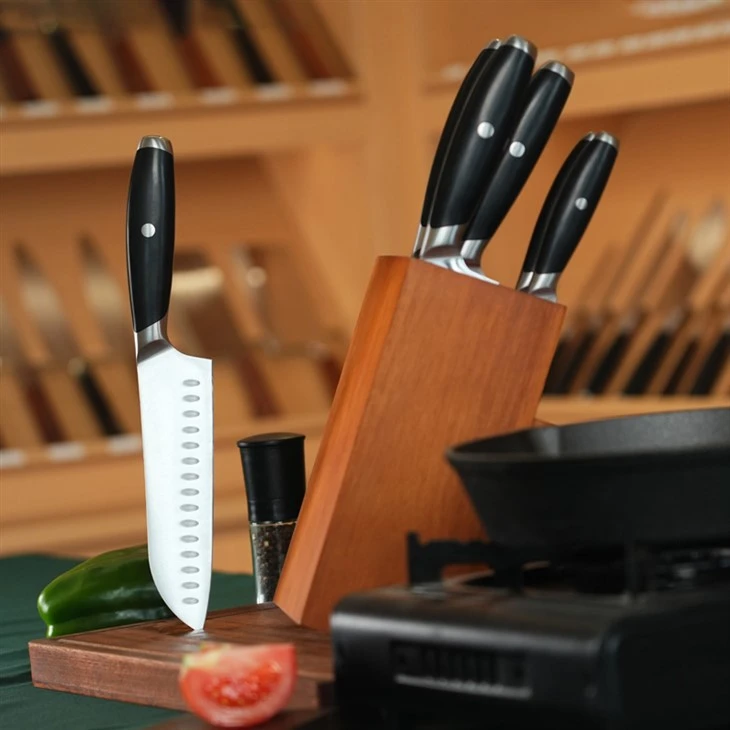
Specific Santoku Knife Recommendations
If you're in the market for a santoku knife to cut through hard fruits, here are some of our top - selling models:
- 7 - inch 70Cr17 Santoku Knife: This knife features a 70Cr17 high - carbon stainless steel blade, which offers excellent sharpness and durability. The 7 - inch blade is perfect for handling medium - sized hard fruits, and the ergonomic handle provides a comfortable grip.
- 7 - Inch Forged Glossy Santoku Knife: The forged construction of this knife gives it added strength and balance. The glossy finish not only looks great but also makes the knife easy to clean. It's a great option for those who want a high - quality santoku knife for cutting hard fruits.
- 7 - inch Germany Steel Satntoku Knife: Made from premium German steel, this santoku knife offers exceptional sharpness and edge retention. The 7 - inch blade is well - suited for a variety of cutting tasks, including slicing through hard fruits.
Maintenance Tips for Santoku Knives
To ensure that your santoku knife continues to perform well when cutting hard fruits, proper maintenance is essential. Here are some tips:
- Sharpen Regularly: Use a sharpening stone or a knife sharpener to maintain the sharpness of the blade. A sharp knife will cut through hard fruits more easily and with less effort.
- Clean After Use: Wash the knife with warm, soapy water after each use, and dry it thoroughly to prevent rust and corrosion. Avoid soaking the knife in water for extended periods.
- Store Properly: Store your santoku knife in a knife block, sheath, or magnetic strip to protect the blade from damage. This will also prevent the knife from getting dull or chipped.
Conclusion
In conclusion, santoku knives are indeed good for cutting through hard fruits. Their sharpness, stability, and versatility make them a great choice for this task. Whether you're a home cook looking to prepare a healthy fruit salad or a professional chef in a busy kitchen, a santoku knife can help you achieve clean, precise cuts with ease.
If you're interested in purchasing a santoku knife for cutting hard fruits or other kitchen tasks, we'd love to hear from you. Our team of experts can help you choose the right knife for your needs and provide you with more information about our products. Don't hesitate to reach out to us for procurement discussions.
References
- "The Art of Japanese Knifemaking" by John Boos & Co.
- "Kitchen Knives: A Comprehensive Guide" by Kitchen Arts & Letters
Send Inquiry